Picture this. It is 8:15 in the morning. You are sitting in an IELTS exam centre with headphones on. The listening section begins. An audio recording plays two Australian students discussing a university project. The words are familiar. But the speed? The accent? The natural overlap of their conversation?
Nothing like the YouTube videos you practiced with for the past two months.
That gap between how you prepared and what the actual test demands is why thousands of Indian students score 0.5 to 1 band below their target every single time.
This guide closes that gap.
Whether you are starting from scratch or retaking the exam to improve a specific module, this complete IELTS exam preparation guide covers everything: the 2026 exam format, module-wise strategy, study plan, band score system, and the mistakes that quietly cost Indian students their dream band. Read it once. Use it throughout your preparation.
IELTS exam preparation 2026 Key Facts at a Glance
| Detail | Information |
|---|---|
| Full Name | International English Language Testing System |
| Conducted By | British Council, IDP Education, Cambridge Assessment English |
| Modules | Listening, Reading, Writing, Speaking |
| Total Duration | 2 hours 45 minutes |
| Band Scale | 1–9 (no pass or fail) |
| Exam Fee in India | ₹19,000 (updated April 2026) |
| Score Validity | 2 years from test date |
| Accepted By | 12,000+ institutions in 140+ countries |
| Available Formats | Computer-delivered / Paper-based |
| Minimum Age | 16 years |
| Types | IELTS Academic / IELTS General Training |
What is IELTS? Origin and Purpose
IELTS stands for International English Language Testing System. It was created in 1989 as a joint project by the British Council, IDP Education, and Cambridge Assessment English. Today it is the world’s most recognised English proficiency test, accepted by over 12,000 institutions across 140 countries — including every major university in Canada, the UK, Australia, and New Zealand.
The test does not measure how much English vocabulary you know. It measures how well you use English in real academic and professional situations. That distinction matters enormously when you prepare.
IELTS comes in two versions. IELTS Academic is for students applying to universities and professional bodies. IELTS General Training is for people applying for work visas, migration, or secondary school programmes. The Listening and Speaking tests are identical for both. The Reading and Writing sections differ in content and difficulty.
If you are unsure which version to take, read our detailed guide on IELTS Academic vs General Training: Which One Is Right for You in 2026 before you register. Choosing the wrong version wastes both money and time.
IELTS 2026 Exam Format What Changed This Year
The 2026 IELTS exam has two significant updates every Indian test-taker should know.
Computer-delivered testing is now the norm. Most test centres in India have shifted to computer-delivered IELTS. You read passages on screen, type your writing responses, and click answers for listening and reading. Paper-based slots still exist but are limited. The marking criteria and band descriptors are exactly the same across both formats. The difference is only in how you input your answers.
The One Skill Retake is now widely available. This is the biggest policy change in IELTS history. If you score well in three modules but fall short in one — say, your Writing is 6.0 but everything else is 7.0 you can retake just that one module without sitting the entire exam again. The retake must happen within 60 days of your original test date. This change alone has saved thousands of Indian students from full retakes.
The overall exam structure in 2026 looks like this:
| Module | Duration | Questions |
|---|---|---|
| Listening | 30 min + 10 min transfer time (paper-based) | 40 |
| Reading | 60 minutes | 40 |
| Writing | 60 minutes | 2 tasks |
| Speaking | 11–14 minutes | 3 parts |
| Total | ~2 hours 45 minutes | — |
The Speaking test is conducted separately, sometimes on a different day. This is important to plan around when booking your exam slot.
The 4 Modules Complete Preparation Strategy for Each
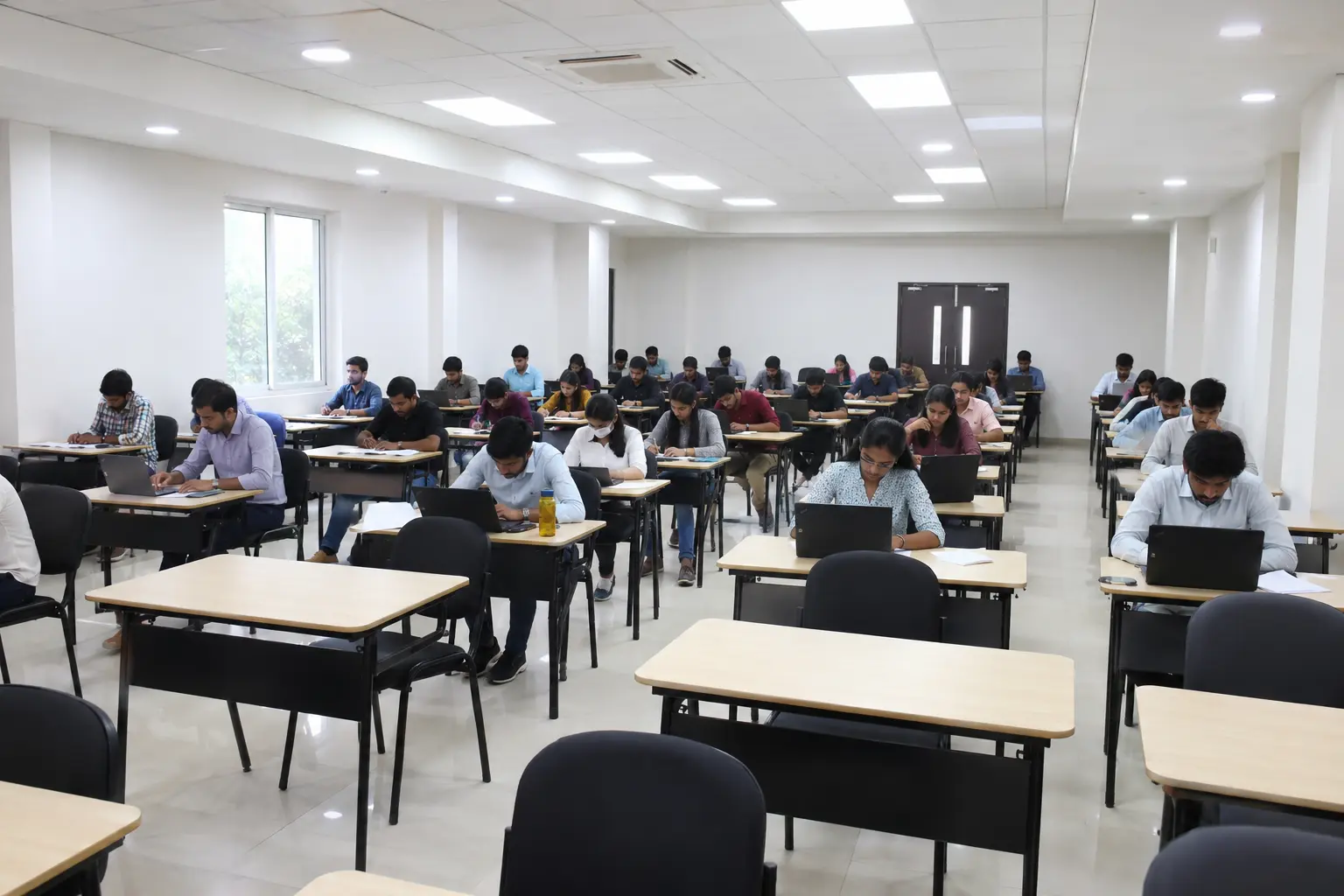
IELTS Reading The Module That Rewards Method Over Speed
The Reading section has three long passages. In Academic IELTS, these come from journals, newspapers, and academic texts. In General Training, they come from workplace notices, advertisements, and articles.
You have 60 minutes to read three passages and answer 40 questions. That is 20 minutes per passage — which feels comfortable until you realise that skimming and scanning are not the same skill, and most students use the wrong one at the wrong time.
The right approach:
Skim the passage first. Do not read every word. Read the first sentence of each paragraph to understand the structure. Then read each question. Then go back and scan for the specific answer.
The most difficult question type in IELTS Reading — the one that costs Indian students the most marks is True/False/Not Given questions. The distinction between False and Not Given confuses even strong English speakers. False means the passage directly contradicts the statement. Not Given means the passage simply does not mention it either way. Many students mark Not Given as False because they assume “not mentioned = wrong.” That assumption costs them an entire band in some cases.
Study resource: Work through Cambridge IELTS Official Practice Tests, Books 14–19. These are the closest to actual exam content and are available on Amazon for under ₹600.
Time target: Practice until you consistently finish each passage in under 18 minutes. The extra 2 minutes becomes your review buffer.
IELTS Writing The Module Where Structure Wins
The Writing section has two tasks and a 60-minute time limit. Most students spend too long on Task 1 and rush Task 2. That is the single most common structural mistake in IELTS Writing.
Task 1 (Academic): Describe a graph, chart, table, map, or diagram in at least 150 words. You have 20 minutes. The examiner is looking for your ability to select and report key information — not your opinion.
Task 2 (Both Academic and General): Write a formal essay of at least 250 words in 40 minutes. This task carries twice the marks of Task 1. Yet most students give it less preparation time.
The most repeated IELTS Writing Task 2 essay topics follow predictable patterns: environment, technology, education, globalisation, health, and social issues. You do not need to memorise answers. You need to practise building a clear argument with a proper structure — introduction, two or three body paragraphs, conclusion — and doing it consistently within 40 minutes.
What IELTS examiners actually score:
- Task Achievement — did you answer what was asked?
- Coherence and Cohesion — does the essay flow logically?
- Lexical Resource — do you use vocabulary accurately and with variety?
- Grammatical Range and Accuracy — can you use complex sentences correctly?
Indian students typically score lower on Task Achievement because they answer what they think was asked, not what was actually asked. Read the question twice. Underline the key instruction words. Then write.
IELTS Speaking The Module Where Fluency Beats Grammar
The Speaking test is a face-to-face conversation with a certified IELTS examiner. It has three parts:
Part 1 (4–5 minutes): General questions about you — your hometown, hobbies, daily routine, food, travel, and similar familiar topics.
Part 2 (3–4 minutes): You receive a cue card with a topic and bullet points. You have one minute to prepare, then speak for 1–2 minutes. The IELTS Speaking Part 2 cue card topics 2026 follow patterns around describing a person, place, experience, or object. Knowing the common topics helps you prepare flexible speaking frameworks in advance.
Part 3 (4–5 minutes): The examiner extends the cue card topic into abstract discussion. This is where the difference between Band 6 and Band 7 is usually decided.
The number one mistake Indian students make in Speaking is translating directly from Hindi or their mother tongue into English. The sentence structures do not transfer. “I am having two sisters” is a direct transfer from Hindi that costs marks. Practise thinking in English, not translating.
How to practise at home:
Record yourself. Listen back. Notice where you pause, repeat words, or lose fluency. Speak on any topic for 2 minutes daily without stopping even if what you say is imperfect. Fluency is a habit, not a talent.
IELTS Listening The Module Where Attention Pays Off
The Listening test plays four audio recordings. You answer 40 questions in 30 minutes while listening. In the computer-based format, you have 10 extra minutes after the test to review your answers. In the paper-based format, you transfer your answers to the answer sheet in that time.
Sections 1 and 2 are conversations in everyday situations booking a hotel, a campus tour. Sections 3 and 4 are academic: a university seminar, a lecture. Most Indian students are comfortable with Sections 1 and 2. Sections 3 and 4 are where marks quietly disappear.
To understand why students fail IELTS Listening Section 3 and 4 and how to fix it the answer is almost always the same: they have only practised with Indian English accents. The IELTS uses British, Australian, American, and Canadian accents throughout. British and Australian accents are dominant. Train your ear on these from the first week of preparation, not the week before your exam.
Daily listening practice sources:
- BBC World Service podcasts
- Australian Broadcasting Corporation (ABC) Radio
- TED Talks with subtitles (turn subtitles off after one week)
IELTS Band Score System What Your Number Actually Means
IELTS scores run from 1 to 9. Your final band score is the average of all four module scores, rounded to the nearest 0.5. There is no pass or fail.
Here is what different bands mean for Indian students applying abroad:
| Band Score | Proficiency Level | Typical Requirement |
|---|---|---|
| 9.0 | Expert | Rare — not usually required |
| 8.0–8.5 | Very Good | Top UK/Australian universities |
| 7.0–7.5 | Good | Most Canadian universities; UK professional bodies |
| 6.5 | Competent+ | Many universities; Canada PR (Express Entry) |
| 6.0 | Competent | Canada student visa (minimum); Australia skilled migration |
| 5.5 | Modest | Foundation programmes; some diploma courses |
| Below 5.0 | Limited | Usually not accepted by universities abroad |
Important: Many universities require a minimum score in each individual module, not just the overall band. A 7.0 overall with a 5.5 in Writing will not satisfy an institution requiring 6.5 in each component. Check module requirements separately.
How to Build Your IELTS Study Plan in 2026
 The most honest thing a trainer can tell you is this: the time you need to prepare depends on where you start.
Students targeting Band 6.0–6.5 with a reasonable English base need 8–10 weeks of structured, daily preparation. Students targeting Band 7.0+ need 12–16 weeks. Students starting from below Band 5.0 need 20+ weeks with consistent speaking and writing feedback from a trainer.
Week-by-week framework (for a 12-week plan):
- Weeks 1–2: Diagnostic mock test → identify your weakest module → study that module’s rules in detail
- Weeks 3–6: Module-by-module practice → Reading and Listening daily → Writing twice per week with feedback → Speaking once per week with recording
- Weeks 7–9: Full mock tests under timed conditions → review every wrong answer → grammar and vocabulary focus
- Weeks 10–12: Exam-condition practice → speaking fluency → Writing Task 2 timed essay × 3 per week → final mock test one week before exam
If you are currently at Band 5.5 and need to reach Band 7, this is one of the most searched journeys in IELTS preparation. Read our complete IELTS band 5.5 to 7 in 60 days study plan for a day-by-day breakdown specifically built for that jump.
Common Mistakes Indian Students Make in IELTS
These are the mistakes trainers see every week at coaching centres across India. None of them are about intelligence or English ability. All of them are about preparation habits.
1. Practicing with wrong audio. Most Indian students watch English YouTube videos to prepare for Listening. YouTube audio is edited, slowed, and optimised for comprehension. IELTS audio is not. Use only official Cambridge test packs and British Council practice material.
2. Memorising vocabulary lists without using them. Learning 50 “IELTS words” per week and writing them in essays is one of the common IELTS myths Indian students believe that quietly lower Speaking and Writing scores. Examiners penalise vocabulary that is used incorrectly or sounds forced. Learn 10 words per week and use each one in three different sentences.
3. Spending equal time on all four modules. Your time is limited. Once you identify your weakest module from your diagnostic test, spend 60% of your preparation time on that module. The biggest band gains come from fixing your weakest area, not polishing your strongest one.
4. Not practising Writing under timed conditions. Every student who writes excellent essays at home struggles to finish on time in the actual exam. Time pressure changes writing quality significantly. From Week 3 of preparation, write every Task 2 essay with a 40-minute timer running. No exceptions.
5. Speaking English only during study time. IELTS Speaking tests your ability to produce English fluently under real-time pressure. That ability comes from habit, not exam prep. Speak English for at least 30 minutes every day — with a friend, with a trainer, or out loud alone.
IELTS Registration in India 2026 Step by Step
IELTS in India is conducted by two authorised organisations: IDP Education and the British Council. Both deliver the same exam. The registration process is the same on either platform.
How to register:
- Visit ieltsidpindia.com (IDP) or britishcouncil.in (British Council)
- Create your account with a valid email ID
- Select your exam type — Academic or General Training
- Choose your city, test centre, and preferred date
- Upload a scanned copy of your valid passport (mandatory — Aadhaar is not accepted)
- Pay the exam fee online — ₹19,000 as of April 2026
- Receive your booking confirmation by email
Important: Exam slots in cities like Dehradun, Haridwar, and Roorkee fill up fast. Book at least 4–6 weeks in advance. If your nearest centre has no slots, check IDP’s test centre locator — some students travel to Chandigarh or Delhi for earlier dates.
Your IELTS score report arrives within 3–5 business days for computer-delivered tests. For paper-based, it takes 13 calendar days. To understand how long IELTS results take in 2026 and what to do while you wait, read our dedicated results guide.
Frequently Asked Questions
What is a good IELTS score for Canada in 2026?
For a Canadian student visa, most universities require a minimum overall band of 6.0–6.5 with no module below 6.0. For Canada PR through Express Entry, the minimum is usually 6.0 with a Comprehensive Ranking System (CRS) boost starting at 7.0 per module. A higher score directly increases your CRS points.
How many times can I attempt the IELTS exam?
There is no limit on how many times you can take IELTS. You can attempt it as many times as needed. However, most immigration and university portals accept only your most recent score or your best score within the validity period of two years. Plan your retake strategy carefully to avoid wasting money.
Is IELTS easier on computer than on paper?
The content, questions, and band descriptors are identical. Whether computer-based is “easier” depends entirely on your typing speed and comfort with reading on screen. If you type slowly or get fatigued reading on a screen, practise on a computer before your test. If you prefer handwriting, book a paper-based slot early they fill up faster.
How long is an IELTS score valid?
Your IELTS score is valid for exactly two years from the date of the test. After two years, the score is considered expired and cannot be submitted to universities or immigration offices. If your application timeline extends beyond two years, you will need to retake the exam.
Can I retake only one module of IELTS?
Yes — this is called the IELTS One Skill Retake. You can retake one module (Listening, Reading, Writing, or Speaking) within 60 days of your original test. The retake result replaces the original score for that module only. This option is available for both Academic and General Training and is now widely offered across India.
What IELTS score does the UK require for a student visa?
The UK student visa (Tier 4) requires an approved Secure English Language Test (SELT) for certain nationalities. IELTS UKVI is the specific version required for UK visa applications. Most UK universities for degree programmes require an overall band of 6.5 to 7.5. Always verify with the specific university, as requirements vary by programme.
Is IELTS preparation possible at home without coaching?
Yes, especially if you already have a strong English base and target Band 6.5 or below. Official Cambridge practice books, the IELTS.org practice platform, and YouTube channels run by certified trainers provide solid free resources. However, for Writing and Speaking — the two productive skills — feedback from a trainer significantly accelerates improvement. Home preparation without feedback tends to reinforce errors rather than correct them.
What is the difference between IELTS Academic and IELTS General Training?
Both versions test the same four skills but differ in Reading and Writing content. Academic IELTS uses complex passages from academic texts and requires a formal essay in Writing Task 2. General Training uses workplace and everyday texts in Reading and may include semi-formal or informal writing in Task 1. Academic is for university admission. General Training is for work visas and migration. When in doubt, check the requirement listed by your target institution or visa office.
Conclusion
IELTS exam preparation in 2026 is not about studying harder. It is about studying right. Know your modules. Know your weakest area. Build a plan around it. Practice under real exam conditions from Week 1, not Week 10.
The students who reach Band 7+ are not the ones with the best English. They are the ones who practised the right way, for the right amount of time, with honest feedback on their weak points.
If you are in Dehradun and want structured preparation with daily module practice and trainer feedback, visit Canadian IELTS, Ballupur Chowk or call us at 075003 17921 to book a free demo class.

Mr. Sanjay Smart has taught IELTS for the last 30 years and has helped more than 15,000 students clear the IELTS and study abroad. He is also the creator of SMART IELTS, an AI-driven IELTS preparation portal, for which he has lent his content creation, UX Design and Prompt Engineering skills.
Leave a Reply